Friday, 18 July 2014

Haggis and Neep Cheeseburgers with Ayrshire Tattie Wedges

Haggis and neep cheeseburgers with Ayrshire tattie wedges

Scotland is no different from the majority of the Western world in that the big American burger chains have more than established their presence. Burgers and fries have become the natural fast food choice for many young (and not so young!) Scots, leading potentially to short, medium and long term nutritional deficiencies and more serious health issues. So I started thinking about how I could come up with a similar creation, give it a uniquely Scottish twist, make it hopefully equally appealing and above all, ensure it provided greater nutritional value.

Ayrshire tatties, haggis and neep

Haggis is almost certainly the foodstuff most people outside Scotland will think of when they think of Scottish food. Perceptions incredibly still abound of furry little creatures in mini-kilts scurrying around the Highlands like ferrets on amphetamines. The reality is of course very different - as is the extent of the popularity of haggis in Scotland - but what better to employ when looking to create an authentically Scottish burger recipe?

Haggis, tatties (potatoes) and neeps (Swede turnip/rutabaga) is a dish mostly associated with Burns' Night in Scotland each year. That is a great shame as there are so many tasty haggis recipes and ways in which you can serve haggis (with or without the tatties and neeps) at any time of year. I have on this occasion used haggis, neeps and new season Ayrshire tatties, a welcome addition to Scottish shops and supermarkets in the summer months. If you are making this dish when they are out of season, you can of course use your tatties of choice. I am also using MacSween haggis, which importantly is one that contains no artificial flavours or colours. In fact, every single main ingredient in this recipe was grown/produced in Scotland.

Parboiling Ayrshire tattie wedges

Ingredients (Serves Two)

Ayrshire new potatoes, medium size, as required
1 225g (1/2 pound) Macsween haggis
1/2 small to medium turnip/neep
Little bit of Scottish unsalted butter
Salt and white pepper
1 tablespoon fresh breadcrumbs
Flour for dusting
Vegetable oil for frying
75g (3 ounces) approximately Scottish cheddar cheese, sliced
4 leaves fresh, crisp, Scottish iceberg lettuce
4 Scottish morning rolls
Malt vinegar

Neep is peeled and chopped

Directions

Wash and if necessary scrub the Ayrshire tatties but they shouldn't be peeled. Cut them in half lengthways and put them in to a pot of cold, salted water. Bring the water to a simmer for fifteen minutes.

Neep pieces are boiled in salted water

Peel and roughly chop the half turnip. Add it to a separate pot of cold, salted water and bring to a simmer until the turnip pieces are just softened (usually fifteen to twenty minutes).

Ayrshire tattie wedges ready for chilling

Drain the tattie wedges through a colander and lay them in a single layer in a plastic dish. Put the dish in to your fridge for an hour to chill and dry out the wedges.

Neeps are mashed with Scottish butter

Drain the softened turnip chunks and return them to the empty pot. It is vital that you then give them five minutes to steam off before mashing. This gets rid of the excess water/moisture. If you don't do this, your mash will be soggy and this will affect the texture of your burgers. Add a little bit of butter and white pepper to the turnip and mash with a hand masher until smooth.

Haggis is cut open

Remove the outer wrapper from the haggis and cut open the inner sleeve as shown above. Squeeze out all the haggis meat in to the pot with the mashed turnip.

Cold haggis meat is added to mashed neeps

Add the breadcrumbs to the pot with the haggis and neeps. Get your sleeves rolled up and use your hands to evenly combine, making sure you have a fairly dry but still workable burger mix. If the mix is too wet, the burgers will sputter hot fat in the pan and probably start to fall apart.

Haggis, neeps and breadcrumbs burger combination

Divide the haggis and neep burger mix in to four equal portions and roll in to balls. Flatten between the palms of your hands in each instance to form burger patties around three-quarters of an inch (just under 2cm) thick.

Haggis and neep burger patties

Dust the bottom of a second plastic dish with flour (to prevent the burgers sticking) and lay them in before refrigerating for half an hour to an hour to let the patties firm up.

Starting to fry haggis and neep burgers

Bring a tablespoon or so of vegetable oil up to a medium heat in a non-stick frying pan and add the burgers to fry. They will take about five minutes each side and should ideally only be turned once.

Start your deep fryer preheating to a fairly high setting. I prefer to use a deep frying pan of oil but that's purely personal preference.

Deep frying Ayrshire tattie wedges

When the burgers have been turned, carefully add the tattie wedges to the deep fat fryer to fry for about five minutes. They are ready when they are beautifully golden in colour.

Frying haggis and neep burgers on second side

While the burgers and wedges are frying, you can use the time to wash and shred the lettuce. Cut open the rolls and divide the shredded lettuce evenly between the bottom halves.

Shredded iceberg lettuce is laid on bread roll bases

When the burgers are just about done, lay the cheese slices in place as shown to melt.

Scottish cheddar cheese is laid on haggis and neep burgers

Lift the tattie wedges to a plate covered with kitchen paper to drain. Season with salt and malt vinegar.

Ayrshire tattie wedges are drained on kitchen paper

Carefully lift the cheeseburgers on to the lettuce beds on the rolls. Place the tops on the rolls, plate the potato wedges and tuck in to this entirely Scottish answer to a burger and fries.

Haggis and neep cheeseburgers are laid on lettuce beds on rolls

Wednesday, 16 July 2014

Smoked Scottish Mackerel and Ayrshire New Potatoes

Smoked mackerel fillets with new Ayrshire potatoes and peas

Mackerel is one of my favourite eating fish. It is delicious, nutritious and incredibly versatile in terms of the many different ways it can be cooked. Smoking mackerel is a great way of preserving it and adding a whole range of delicious new flavours, not just from the smoke but from the brining solution initially used on the uncooked fillets. I regularly go sea fishing and when I do get a nice bag of summer mackerel, I love to smoke them myself at home. This is a lot easier than you may think, with the results more than justifying the time invested.

Me preparing to smoke freshly caught mackerel fillets at home
I've written an easy to follow guide on how to smoke mackerel at home but aside from the fresh mackerel, the first thing you will need is a smoker. Smokers come in a huge variety of  forms (both hot and cold smokers) as well as a huge variety of price ranges but you can pick up a real bargain home smoker on your local Amazon Internet platform. It is also of course not just mackerel or even fish in general that you can smoke, with smoked duck breasts being a particular favourite of mine.


In this instance, however, the smoked mackerel and the remainder of the meal ingredients were supermarket bought, allowing anyone to prepare this tasty and nutritious meal at home.

Scottish Ayrshire potatoes

I remember as a child how my Gran used to look forward to the first Ayrshire potatoes of the season appearing in the shops each July. The dish prepared had to be be Loch Fyne herring, fried in oatmeal and served with buttered little Ayrshire potatoes. Tragically, the once abundant herring are long gone from Loch Fyne due to over-fishing and horrific commercial fishing practices but at least each July still brings Ayrshire potatoes to the shops.

Starting to cook Ayrshire potatoes by boiling

To prepare this dish the first thing I had to do was get the potatoes on to cook. These Scotty Brand potatoes had been prewashed so I simply added them to a pot with plenty of cold water and some salt. I put the pot on to reach a boil before reducing the heat to simmer for about twenty-five to thirty minutes until just soft.

Scottish smoked mackerel fillets

These vacuum packed smoked mackerel are ready to eat. They could simply be taken from the pack and plated but I prefer to remove the skin before I add them to the plate. To do this, simply pinch the skin at the tail (narrower, pointed) end and peel. It will usually come off fairly easily in one piece.

Peeling skin from smoked mackerel fillets

When the potatoes are ready, drain them through a colander at your sink. Let them steam off for a couple of minutes while you get the frozen peas on to cook.

Draining boiled potatoes

Unless you have peas in the garden which you are picking immediately before they are to be eaten, the healthiest way to buy peas is frozen. Even peas still in their pods at supermarkets or farmers' markets have been picked many hours or even days before so will have lost a lot of their natural sugars and nutritional value. Frozen peas are frozen within a couple of hours of being picked to freeze in all the natural goodness.

Frozen peas are added to boiling water

Add the peas to a pot of boiling water and simmer for three minutes. They can then be drained to serve.

When the peas are on, put the potatoes back in to your pot and add a knob of unsalted Scottish butter. Fresh herbs like mint or chives are excellent with potatoes but I also like to use dill, especially when I'm serving the potatoes with oily fish, with which dill also works extremely well.

Lay the skinned mackerel fillets on your serving plate before adding the potatoes. I like to season the drained peas with black pepper and malt vinegar while swirling them gently in the colander but this is optional before they are also plated. A lemon wedge was used here as a simple but final garnish.
  
Scottish butter and dried dill are added to boiled potatoes

Tuesday, 15 July 2014

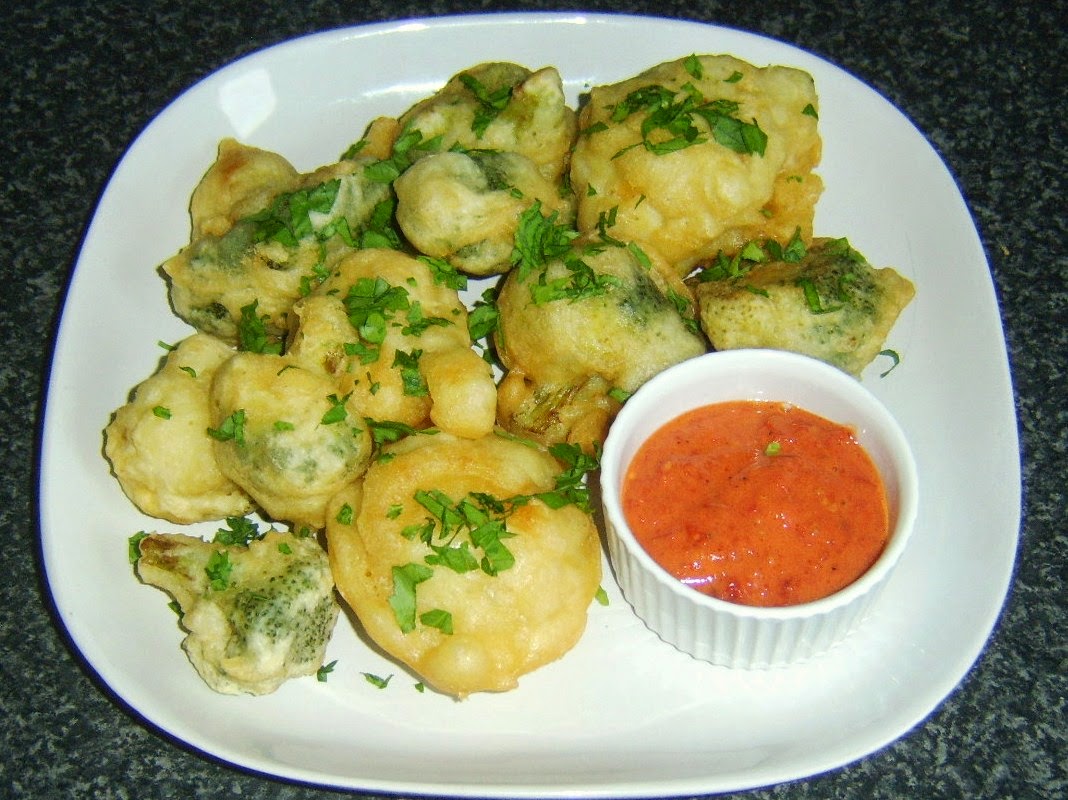
Broccoli and Cauliflower Fritters with Homemade Tomato Sauce

Broccoli and cauliflower florets deep fried in light batter with tomato sauce

Do you ever have problems getting your family to eat their greens? Maybe you personally are not the biggest vegetable fan in the world? Whatever your taste in and attitude to vegetables, however, hopefully you will find this incredibly simple but tasty idea worth trying.

Fritters and tomato sauce in Scotland generally of course means thick slices of potato, dipped in batter and deep fried in hot fat or oil before being served with tomato sauce or ketchup from a bottle. These fritters are very different, as is the tomato sauce with which they are served. Instead of using potato, I have used summer fresh broccoli and cauliflower, allowing these delicious and nutritious vegetables to be enjoyed in a totally dissimilar way from what would perhaps be the norm. The tomato sauce is made from oven roasted, fresh plum tomatoes.
  
Conventional Scottish fritters and tomato sauce

I started by simply blanching the cauliflower and broccoli florets in boiling water for a couple of minutes. Don't cook them for much longer than this or they will become too soft and be difficult if not impossible to batter and deep fry.

Parboiling broccoli and cauliflower florets

After a couple of minutes of simmering in the boiling water, drain the broccoli and cauliflower and allow it to steam off in the colander for five minutes. This gets rid of as much of the excess moisture as possible. You should then pour away any water which has accumulated in the pot, re-add the vegetables, cover and leave to cool completely.

Broccoli and cauliflower florets are drained and left to steam

These are mini plum tomatoes but you could use any type/size of tomato in the same way. You do, however, want to make sure they are fully ripe.

Baby plum tomatoes

Cut the tomatoes in half and sit them on a roasting tray. Drizzle with olive oil and season with salt and pepper. I also scattered over a pinch each of dried basil and dried oregano, just to add a little bit of extra flavour to the sauce.

Seasoned plum tomatoes ready for roasting

Put the tray in to the oven at 150C/300F/Gas Mark 2 for forty-five minutes. When they come out of the oven, the tomatoes should then be covered and set aside to cool.

Roasted plum tomatoes

The batter for the fritters is simply self-raising/rising flour, salt and cold water. Add the flour to a large bowl (about four tablespoons for this quantity of veg) and season with salt. Slowly begin pouring in cold water as you whisk with a fork until you have batter approximately the consistency of single (light) cream. Put it in to the fridge to rest for fifteen minutes.

Simple batter for deep frying

While the batter is resting in the fridge, you should pour the tomatoes in to a food processor or blender. Be sure to get all the juices and oil in there as well. Blitz until smooth then pour in to a ramekin or similar dish to serve.

Homemade tomato sauce

Your deep fryer or equivalent needs to be brought up to a fairly high heat for making the fritters. While it is heating, put the broccoli and cauliflower florets in to a bag with a couple of tablespoons of flour. I had to do this in two batches, simply because of the quantity in relation to the size of my bags. If you overfill, you won't get the even flour coating you need.

Flouring broccoli and cauliflower florets

Twist the bag closed, trapping as much air in it as possible. That is important. Simply invert a dozen or more times to get all the florets coated in flour. Do not shake the bag as this could damage the delicate vegetable pieces.

Broccoli and cauliflower florets are sealed in bag with flour

When the oil is hot, take the batter from the fridge. Working carefully but as quickly as possible, dip one floret in the batter at a time, let any excess briefly drain off and lay directly in the hot oil. Again, you may have to fry in two batches.

Battered broccoli and cauliflower florets are added to hot oil

Turn the fritters after a couple of minutes with a deep frying spider or equivalent.

Deep frying battered broccoli and cauliflower florets

Lift the fritters when done to a plate covered with kitchen paper and let them drain for a minute or so.

Battered and deep fried brocooli and cauliflower fritters are drained

The fritters were finally plated to serve with the tomato sauce dip and a brief scattering of parsley simply as a garnish.

Broccoli and cauliflower fritters are plated with tomato sauce

Tuesday, 8 July 2014

Scottish Rolls with Homemade Sausages and Tomato Sauce

Homemade Lorne sausages and tomato sauce on Scottish rolls

In my previous post, I looked at the Scottish roll and sausage, which sees a square/sliced/Lorne sausage served on a bread roll. I focused largely upon cooking and serving bought sausages in a healthier fashion. In this post, I'm going to look at making not only the sausages but the accompanying tomato sauce from scratch in a hopefully healthier way.

The sauce has to be made first. What I am doing is essentially roasting some tomatoes in the oven before mashing them up to form a sauce. You could strain the tomatoes through a sieve or even blitz them in a food processor or blender but I ultimately chose to do neither and make a chunky, rustic tomato sauce.

Take three small tomatoes and cut them in half. Lay them cut sides up on a roasting tray. Season with salt, pepper and a pinch of oregano. Grate a peeled garlic clove over the top and drizzle with extra virgin olive oil. They then go in to the oven at 150C/300F/Gas Mark 2 for forty-five minutes.

Cherry tomato halves ready for roasting

While the tomatoes are roasting, you should use some of the time to prepare your Lorne sausage mix. These sausages are sometimes made with beef, sometimes pork but more commonly with a combination of the two. I am using 60% minced (ground) beef and 40% pork. I'm using six ounces of the combination to make what will be two sausages. Normally, sliced sausages are compressed in to large blocks and sliced (hence the name) so a far greater quantity of meat would be used in the recipe. What I am effectively doing is making the meat combination in to round sausages - or burger patties.

Meat and spices for homemade Lorne sausages

Put the mince in to a large glass or stone bowl. Season with half a teaspoon each of ground nutmeg, ground coriander seed and black pepper, as well as a good pinch of salt.

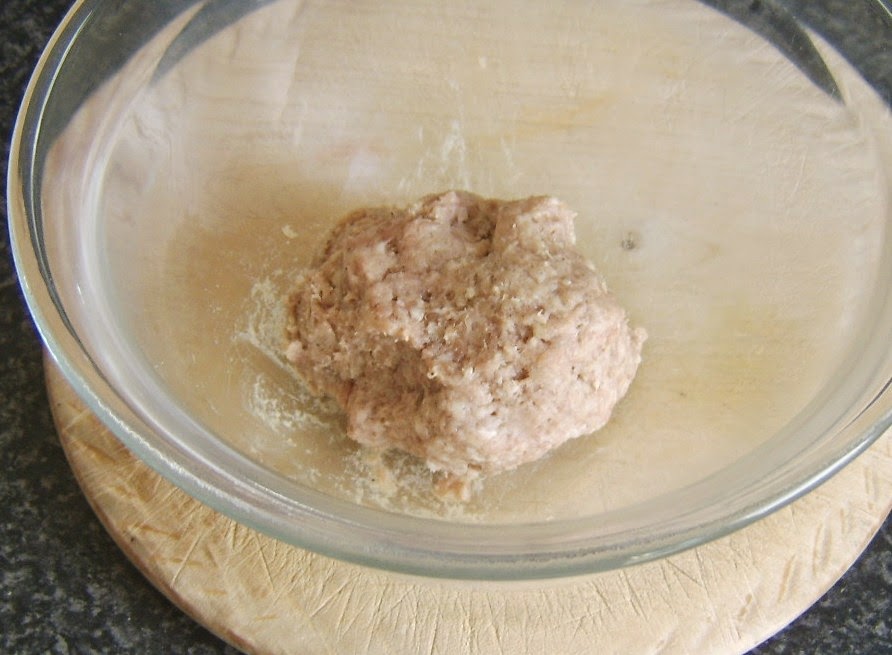
Homemade Lorne sausage meat combination

Use your hands to fully squeeze and mix all the ingredients together to evenly combine.

Oven roasted cherry tomatoes

Take the tray containing the tomatoes from your oven and pour them in to a bowl. Be sure to include all the olive oil and juices.

Roasted tomatoes are mashed with a fork

Take a fork and mash the tomatoes in to a chunky sauce. They can then be left to cool while the sausages are fried.

Starting to fry homemade Lorne sausages

Add a tablespoon or two of vegetable or sunflower oil to a non-stick frying pan and bring it up to a low to medium heat. Divide the meat combination in to two equal portions and roll in to balls. Flatten between the palms of your hands and lay the patties in the pan.

Homemade Lorne sausages are fried on their second side

The sausages will take around five minutes each side to fry on a low to medium heat. Ideally, you should turn them only once during this time.

Homemade Lorne sausages are added to toasted roll halves

It is entirely optional but I have lightly toasted the cut sides of the rolls here under the grill (broiler). Either way, lay the sausages on the bottom half of the rolls, spoon on the tomato sauce and garnish with some rolled and sliced basil leaves before closing the rolls over to serve.

Don't think these look like the Lorne/sliced sausages you get from your supermarket or butcher's? This is a traditional recipe and contains no artificial colourings or preservatives. Not all commercially produced sliced sausages contain colourings but a great many do. These colours may be as simple as tomato puree or paste; or they may be of a more sinister/chemical variety...

Scottish rolls with homemade Lorne sausages and tomato sauce